
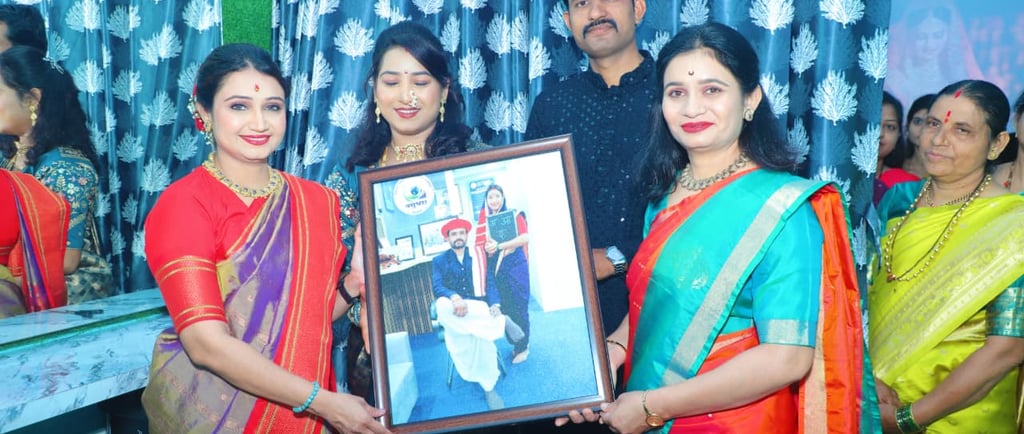
Swati Anil Kanher Patil at a cultural festival in Buldhana, Maharashtra, supporting artisans and preserving local heritage.
Swati Anil Kanher Patil supports Buldhana’s cultural heritage, empowering artisans, promoting festivals, and preserving identity for future generations.
11/2/20252 min read
Art, Culture, and Identity: Why Preserving Heritage Matters to Swati Kanher
Buldhana, Maharashtra — Culture is more than art, music, or festivals; it is the living memory of a community, the invisible thread that connects past, present, and future. In Buldhana, a district known for its rich traditions, historical sites, and vibrant folk culture, heritage forms the foundation of social identity, communal pride, and shared values. Preserving this heritage is not simply an act of nostalgia—it is a responsibility that ensures communities retain their roots, educate future generations, and build resilient, culturally aware societies.
Among the individuals leading this mission is Swati Anil Kanher Patil, Chairman of Vasundhara Nagari Sahakari Patasanstha, whose vision extends far beyond her professional achievements. Through her philanthropic and community initiatives, she actively supports the preservation of Buldhana’s art, culture, and historical identity, ensuring that traditions remain vibrant, accessible, and meaningful.
Buldhana: A Mosaic of Art, Culture, and History
Buldhana’s cultural landscape is multi-dimensional, encompassing historical monuments, temples, folk arts, festivals, crafts, and oral traditions. Each of these elements contributes to a collective identity, telling stories of valor, devotion, community resilience, and creative expression.
Historical Sites and Monuments:
The district is home to ancient forts, temples, and heritage structures, such as Lonar Temple, Rajur Fort, and village shrines, which not only showcase architectural brilliance but also represent centuries of local governance, spiritual devotion, and community life. These sites are crucial touchstones for education, tourism, and civic pride, linking current generations with their historical roots.Folk Arts and Performance Traditions:
Buldhana’s folk culture includes Powada (heroic ballads), Tamasha (folk theatre), Lavani, and Bhajan singing, which convey historical narratives, moral lessons, and spiritual devotion. These arts are living traditions, taught orally and performed publicly, creating communal bonds and fostering local identity.
Craftsmanship and Local Industries:
From handwoven textiles to pottery, woodcraft, and jewelry, Buldhana’s artisans maintain centuries-old skills. Supporting these crafts not only preserves cultural knowledge but also provides sustainable livelihoods, empowering communities
Economically while reinforcing cultural pride.
Festivals and Rituals:
Local festivals, tied closely to agricultural cycles and religious observances, are celebrated with unique regional flavors, bringing communities together for worship, music, dance, and shared feasts. Festivals like Pola, Gudi Padwa, Ganesh Chaturthi, and Diwali serve as vehicles for intergenerational transmission of knowledge, ethics, and community values.
The Importance of Preserving HeritageThe act of preserving art, culture, and identity has broad social, educational, and economic implications:
Education: Exposure to history, arts, and traditions provides contextual learning, fostering a deeper understanding of social, ethical, and civic values.
Economic Empowerment: Supporting artisans and cultural programs creates income-generating opportunities, particularly for women and marginalized communities.
Community Cohesion: Shared cultural practices reinforce unity, belonging, and collective pride, fostering resilience and social stability.
Youth Engagement: When young people connect with heritage, they develop identity, empathy, and civic responsibility, becoming guardians of culture for future generations.
Global Awareness: Preserved heritage attracts tourism, research, and cultural exchange, highlighting regional uniqueness on a broader stage.
© 2025. All rights reserved.
Contacts
+91 86697 53578
swatikanherpatil@gmail.com
Get in touch
Address
VASUNDHARA Nagari Sahakari Patasanstha.Circular Road, dhad naka, Ramnagar, Buldhana, Maharashtra, India