
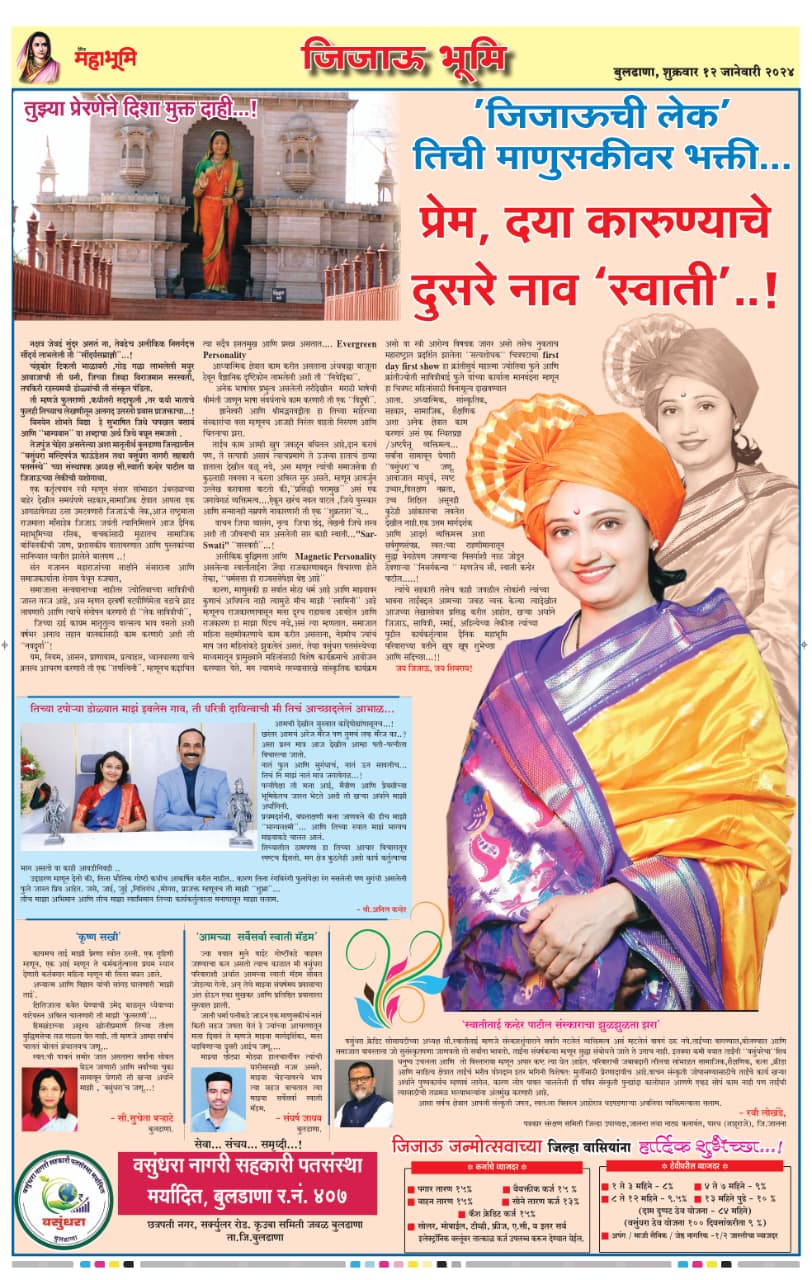
Swati Anil Kanher Patil at a cultural festival in Buldhana, Maharashtra, supporting traditional arts, crafts, and youth participation
Swati Kanher preserves Buldhana’s local traditions, folk arts, festivals, and history, empowering youth and communities to carry heritage forward.
11/2/20252 min read
Remembering the Roots: Keeping Local Traditions Alive for Future Generations in Buldhana
Buldhana, Maharashtra — In the heart of Maharashtra, the district of Buldhana is a treasure trove of traditions, stories, and cultural practices that have been passed down through generations. From vibrant festivals to unique folk arts, intricate crafts, and enduring rituals, the district’s heritage reflects the collective memory of its people, their values, and their connection to land, community, and faith. In an era of rapid urbanization and cultural change, preserving these traditions is more than a matter of pride; it is essential for ensuring that the identity and spirit of the region remain alive for future generations.
Swati Anil Kanher Patil, Chairman of Vasundhara Nagari Sahakari Patasanstha, has long understood this delicate balance between progress and preservation. Beyond her professional role in financial services, she has been a steadfast supporter of initiatives that document, celebrate, and sustain Buldhana’s local traditions, recognizing that culture is both a foundation for social cohesion and a source of inspiration for the youth.
The Richness of Buldhana’s Local Traditions
Buldhana’s heritage is multi-faceted, encompassing religious practices, folk arts, crafts, festivals, and oral storytelling. Its traditions are closely tied to the rhythms of rural life, agriculture, and spiritual observances, creating a distinct identity within Maharashtra’s cultural landscape.
Folk Arts and Music:
Buldhana is home to vibrant forms of folk music, dance, and storytelling that have been preserved across centuries. Local performers keep alive Powada (historical ballads), Tamasha (folk theatre), and Bhajan singing, which convey tales of valor, devotion, and moral lessons. These performances are not only artistic expressions but also vehicles for cultural education, passing on history, local legends, and ethical values.
Festivals and Rituals:
Traditional festivals like Diwali, Ganesh Chaturthi, Pola, and Gudi Padwa are celebrated with unique local variations, reflecting the community’s agricultural cycles, spiritual beliefs, and social cohesion. During these occasions, villages come together to perform rituals, folk dances, and communal feasts, reinforcing shared identity and cultural continuity.Crafts and Artisanship:
Buldhana’s artisans produce a variety of crafts, from handwoven textiles and pottery to decorative wooden items and traditional jewelry. These crafts are not only a source of livelihood but also tangible expressions of regional aesthetics and skill, preserving centuries-old techniques and design sensibilities.
Oral History and Storytelling:
Oral traditions, including storytelling by elders and recitation of local legends, form an integral part of cultural preservation. These narratives transmit moral lessons, historical knowledge, and social norms, creating intergenerational bonds and a shared sense of belonging.Religious and Historical Sites:
Temples, forts, and community centers in Buldhana serve as physical reminders of the region’s historical and spiritual legacy. Structures such as the Lonar Temple, Rajur Fort, and ancient village shrines embody architectural ingenuity, spiritual devotion, and historical significance.
Challenges to Preserving Local Traditions
Despite their richness, Buldhana’s local traditions face significant challenges in the modern era. Rapid urbanization, migration, commercialization, and a shift toward digital lifestyles have caused some folk practices, crafts, and rituals to fade. Younger generations may become disconnected from their heritage, and skilled artisans struggle to maintain sustainable livelihoods.
Recognizing these challenges, Swati Kanher’s efforts focus on bridging the gap between tradition and modernity, ensuring that local culture remains accessible, relevant, and valued.
© 2025. All rights reserved.
Contacts
+91 86697 53578
swatikanherpatil@gmail.com
Get in touch
Address
VASUNDHARA Nagari Sahakari Patasanstha.Circular Road, dhad naka, Ramnagar, Buldhana, Maharashtra, India